
A Caregiver’s Guide to Creating a Safe Environment for Aging Loved Ones
For many families, home is where an aging loved one feels most comfortable, independent, and connected to the people they love. As people get older, however, changes in mobility, balance, vision, strength, and daily abilities can make familiar surroundings more challenging to navigate.
Creating a safer home does not necessarily require major renovations. In many cases, simple changes—such as improving lighting, removing trip hazards, installing grab bars, and keeping frequently used items within easy reach—can make a meaningful difference.
For family caregivers, home safety should be an ongoing process rather than a one-time project. As your loved one’s abilities and needs change, the home may need to change with them.
The National Institute on Aging recommends evaluating an older adult’s home room by room, addressing immediate hazards first and regularly reassessing safety as needs change.
Why Home Safety Matters for Older Adults
Falls are one of the most important safety concerns for older adults.
According to the CDC, falls among adults age 65 and older caused more than 38,000 deaths in 2021 and resulted in nearly 3 million emergency department visits. The CDC emphasizes that falls are preventable and that simple changes can help reduce risk.
The good news is that caregivers can take practical steps to make the home safer.
A safer home can help an aging loved one:
- Move around with greater confidence
- Reduce common trip and slip hazards
- Maintain independence
- Complete everyday activities more safely
- Remain at home longer
- Reduce caregiver concerns about preventable accidents
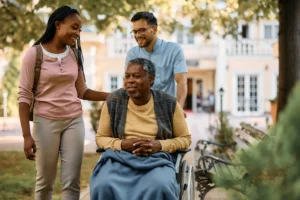
Home safety is especially important for families who want their loved ones to age in place—remaining in their own home while receiving the support they need.
1. Start With a Room-by-Room Home Safety Assessment
One of the easiest ways to identify safety problems is to walk through the home from your loved one’s perspective.
Don’t simply look for obvious hazards. Think about the activities they perform every day.
Ask:
- Can they easily get from the bedroom to the bathroom at night?
- Are frequently used items easy to reach?
- Are stairs adequately lit?
- Can they safely get in and out of the shower?
- Are electrical cords crossing walking paths?
- Is furniture positioned so there is enough room to walk?
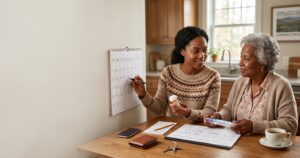
- Are medications stored safely?
- Can your loved one easily reach a telephone in an emergency?
The NIA recommends going through the home room by room to identify potential problems and correcting immediate dangers first.
A home safety assessment should also be repeated periodically because an environment that is safe today may not remain safe if your loved one’s mobility or abilities change.
2. Reduce Fall Hazards Throughout the Home
Fall prevention should be one of the first priorities when creating a safe environment for an older adult.
Start by looking at floors, hallways, stairs, and frequently used walking paths.
Remove or secure loose rugs
Small rugs and throw rugs can become trip hazards. The NIA specifically recommends avoiding throw rugs and ensuring that carpets are firmly secured to the floor.
Keep walkways clear
Shoes, books, clothing, bags, electrical cords, and other objects should not be left in areas where your loved one walks.
Improve lighting
Poor lighting can make it difficult to see obstacles, especially for someone with reduced vision.
Make sure hallways, stairways, entrances, and bathrooms are adequately illuminated. Motion-activated lights can also be useful in certain areas.
Check stairs
Stairs should have secure handrails. The NIA recommends handrails on both sides of stairs where appropriate and good lighting at the top and bottom.
3. Make the Bathroom Safer
The bathroom is one of the most important areas to evaluate because wet surfaces can increase the risk of slipping.
Consider:
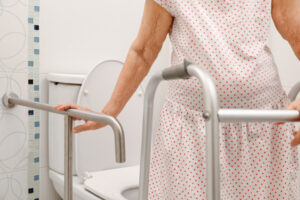
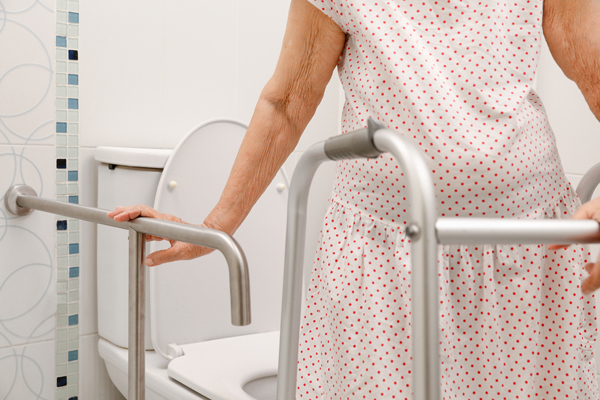
- Installing grab bars near the toilet
- Installing grab bars inside and outside the tub or shower
- Using nonslip strips or mats on wet surfaces
- Adding a night-light
- Keeping frequently used toiletries within easy reach
- Making sure the bathroom floor stays dry
- Providing appropriate seating or bathing equipment when recommended
The NIA specifically recommends grab bars around toilets and tubs or showers and nonslip surfaces in areas that may become wet.
If your loved one has difficulty getting into or out of the shower, don’t assume that simply telling them to “be careful” is enough. The environment may need to be modified to make the activity safer.
4. Improve Bedroom Safety
Many falls happen when people get out of bed, particularly during nighttime trips to the bathroom.
Consider keeping:
- A night-light near the bed
- A flashlight within easy reach
- A telephone or charged mobile phone nearby
- Frequently needed items within reach
- A clear path between the bed and bathroom
The NIA recommends having light switches close to the bed and keeping a flashlight and phone nearby.
A clear nighttime pathway can make a significant difference, especially when someone is tired or has difficulty seeing in low light.
5. Make the Kitchen Easier and Safer to Use
The kitchen can present several different safety challenges, including falls, burns, cuts, and difficulty reaching items.
Try to keep frequently used cookware, dishes, and utensils at comfortable heights.
Avoid requiring an older adult to:
- Stand on a chair
- Reach excessively high
- Carry heavy objects across the kitchen
- Walk across a wet floor
- Navigate around clutter
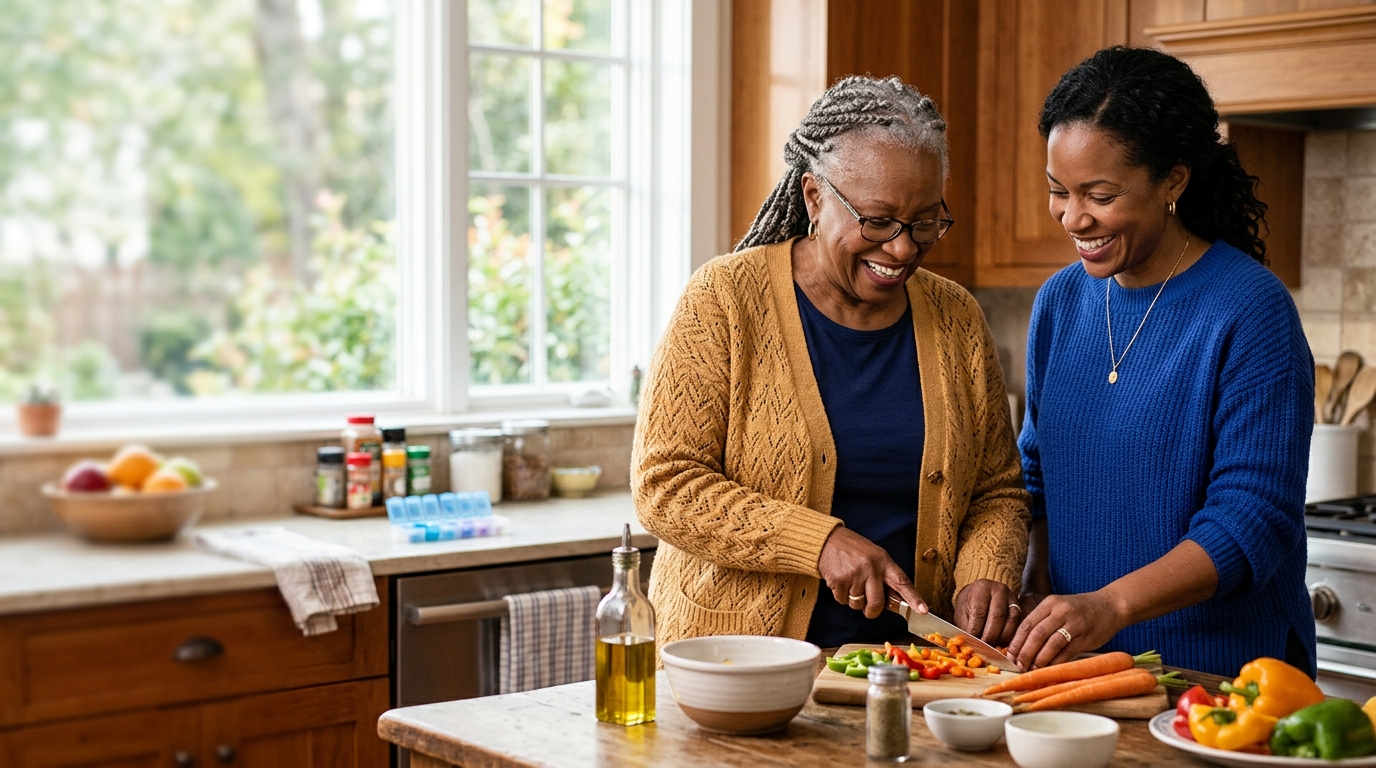
The NIA recommends keeping frequently used kitchen items easy to reach and cleaning spills immediately. It also suggests preparing food while seated when fatigue or balance problems are concerns.
For someone experiencing cognitive changes, additional precautions may be necessary around ovens, stovetops, knives, cleaning products, and other potentially dangerous items.
6. Pay Attention to Furniture Placement
Furniture should support movement rather than create obstacles.
Look at:
- Coffee tables
- Chairs
- Sofas
- Footstools
- Lamps
- Electrical cords
- Decorative items
Make sure there is enough space to walk safely between furniture.
Chairs and sofas should also be at a height that makes it reasonably easy for your loved one to sit down and stand up.
The NIA recommends arranging furniture and other objects so they do not interfere with walking and keeping frequently used items within easy reach.
7. Keep Frequently Used Items Within Reach
One simple safety principle for caregivers is:
If your loved one uses it every day, make it easy to reach.
Reaching, bending, climbing, or stretching can increase the risk of losing balance.
Place commonly used items at comfortable heights, including:
- Clothing
- Kitchen supplies
- Personal-care products
- Frequently used household items
- Phones and communication devices
Avoid storing important everyday items in locations that require your loved one to use a ladder or chair.
8. Don’t Forget Outdoor Areas
Home safety does not stop at the front door.
Check:
- Porches
- Steps
- Driveways
- Walkways
- Decks
- Garages
- Outdoor lighting
Look for uneven surfaces, debris, wet areas, loose railings, and other hazards.
The NIA recommends keeping outdoor walkways clear, adding nonslip material to outdoor stairs when appropriate, maintaining porch lighting, and addressing uneven or damaged steps.
During Connecticut winters, caregivers should pay particular attention to ice and snow on walkways and steps.
9. Review Vision, Hearing, Medications, and Mobility
Home modifications are important, but safety is not only about the physical environment.
A person’s health and abilities can also influence fall risk.
The CDC recommends discussing fall risk with a healthcare provider, reviewing medications that may cause dizziness or sleepiness, maintaining vision care, and participating in strength and balance activities appropriate for the individual.
If your loved one experiences:
- Frequent dizziness
- New balance problems
- Difficulty walking
- Repeated falls
- Changes in vision
- Difficulty getting up from chairs
- Increased fatigue
talk with their healthcare provider.
A healthcare professional may also recommend an occupational or physical therapist to evaluate the home and suggest safety improvements.
10. Make Emergency Information Easy to Find
Caregivers should also prepare for situations when something goes wrong.
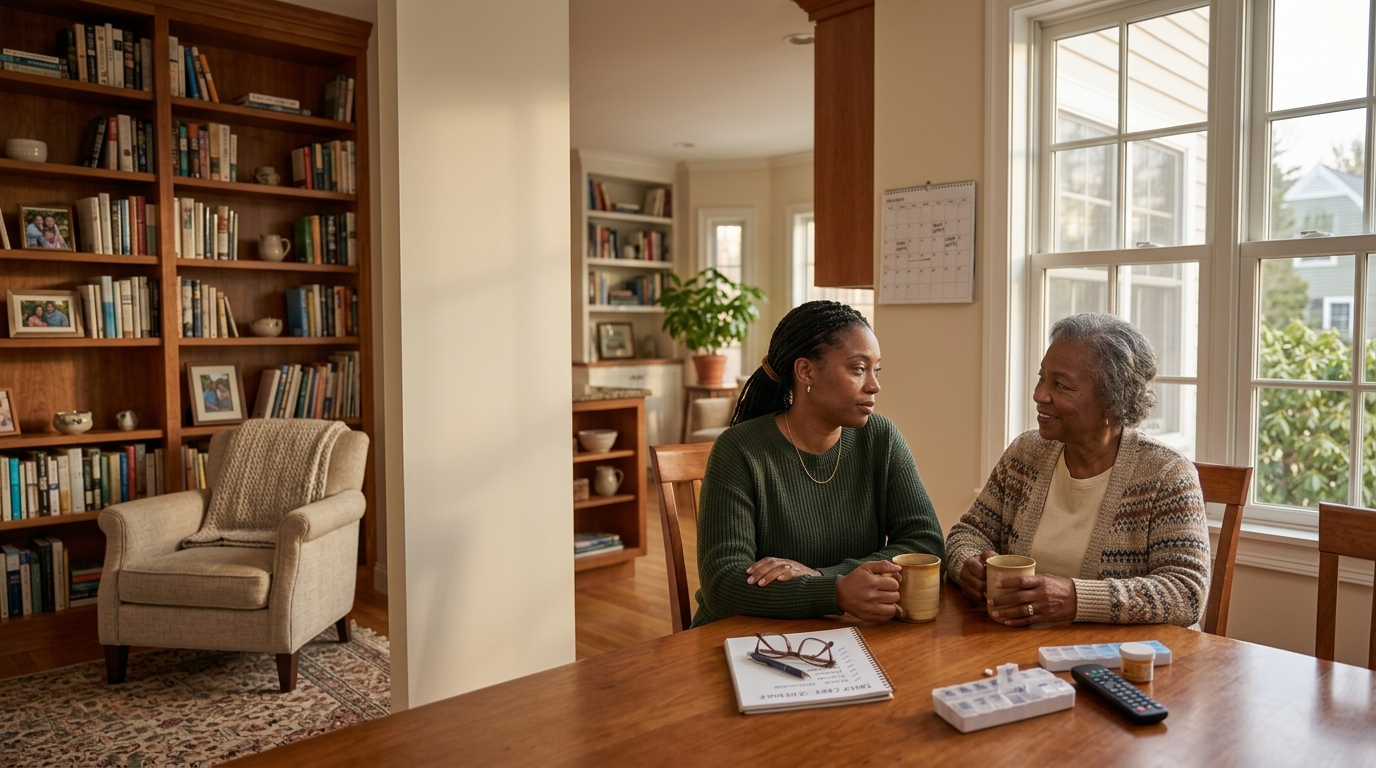
Keep important information easy to access, including:
- Emergency contacts
- Healthcare provider information
- Medication information
- Allergies
- Important medical conditions
- Family contact information
The NIA recommends keeping emergency numbers in an easily accessible location and having a way for the older adult to call for help if needed.
A charged phone should be accessible to your loved one, particularly near the bedroom and other areas where they spend significant time.
11. Consider Safety Needs Related to Memory or Cognitive Changes
If your loved one experiences Alzheimer’s disease or another condition that affects memory or judgment, additional safety considerations may be necessary.
For example, caregivers may need to consider:
- Stove and oven safety
- Medication storage
- Cleaning-product storage
- Door and wandering safety
- Bathroom safety
- Sharp objects
- Emergency identification
- Smoke and carbon-monoxide detectors
The NIA recommends adapting the home as abilities and behaviors change and securing potentially dangerous items when necessary.
The goal is not to make the home feel restrictive. Instead, caregivers should create an environment that provides safety while preserving as much independence and dignity as possible.
12. Don’t Take Away Independence—Make Independence Safer
One of the biggest mistakes caregivers can make is assuming that safety means doing everything for an aging loved one.
It doesn’t.
Whenever possible, the goal should be to support independence rather than unnecessarily replace it.
For example, instead of taking over meal preparation completely, consider making the kitchen easier to use.
Instead of discouraging movement because of fall concerns, talk with healthcare professionals about appropriate strength and balance activities.
Instead of automatically restricting everyday activities, look for ways to make those activities safer.
Aging in place is often about finding the right balance between independence, safety, dignity, and support. The NIA notes that many older adults want to remain at home and that home-based support can include personal care, household tasks, meals, transportation, healthcare-related assistance, and safety support.
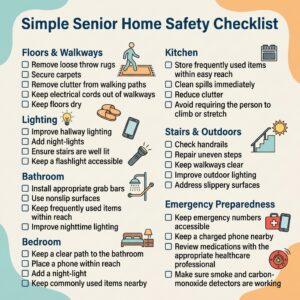
Simple Senior Home Safety Checklist
Use this quick checklist as a starting point:
Floors & Walkways
☐ Remove loose throw rugs
☐ Secure carpets
☐ Remove clutter from walking paths
☐ Keep electrical cords out of walkways
☐ Keep floors dry
Lighting
☐ Improve hallway lighting
☐ Add night-lights
☐ Ensure stairs are well lit
☐ Keep a flashlight accessible
Bathroom
☐ Install appropriate grab bars
☐ Use nonslip surfaces
☐ Keep frequently used items within reach
☐ Improve nighttime lighting
Bedroom
☐ Keep a clear path to the bathroom
☐ Place a phone within reach
☐ Add a night-light
☐ Keep commonly used items nearby
Kitchen
☐ Store frequently used items within easy reach
☐ Clean spills immediately
☐ Reduce clutter
☐ Avoid requiring the person to climb or stretch
Stairs & Outdoors
☐ Check handrails
☐ Repair uneven steps
☐ Keep walkways clear
☐ Improve outdoor lighting
☐ Address slippery surfaces
Emergency Preparedness
☐ Keep emergency numbers accessible
☐ Keep a charged phone nearby
☐ Review medications with the appropriate healthcare professional
☐ Make sure smoke and carbon-monoxide detectors are working
When an Aging Loved One Needs More Help at Home
Sometimes home modifications aren’t enough.
If your loved one increasingly needs help with bathing, dressing, preparing meals, moving around the home, managing daily routines, or staying safe, it may be time to consider additional support.
Some signs that additional caregiving support may be helpful include:
- Frequent falls or near-falls
- Difficulty completing personal-care activities
- Trouble preparing meals
- Increasing difficulty walking around the home
- Forgetting important safety steps
- Difficulty managing everyday household tasks
- Increased caregiver stress
- A noticeable decline in independence
These changes don’t necessarily mean your loved one needs to leave home.
With the right combination of family involvement, home modifications, professional guidance, and appropriate in-home support, many families can create a safer environment while helping their loved one remain at home.
Supporting Safer Aging at Home
At Able Care At Home Services, we understand that caring for an aging family member involves much more than completing daily tasks.
Family caregivers often want the same thing: to help their loved ones remain safe, comfortable, respected, and connected to the people they know and trust.
Our goal is to help families understand their options and find appropriate support for care at home.
For Connecticut families exploring Adult Family Living (AFL) and other home-based care options, understanding your loved one’s needs is an important first step.
If you’re caring for a loved one at home and wondering whether additional support may be available, Able Care At Home Services can help you learn more about your options.
Final Thoughts
Creating a safe home for an aging loved one doesn’t have to happen all at once.
Start with the areas that present the greatest risks. Remove obvious trip hazards. Improve lighting. Make the bathroom safer. Keep everyday items within reach. Review mobility and medication concerns with the appropriate healthcare professionals.
Most importantly, continue reassessing the home as your loved one’s needs change.
A safer home can help support independence, dignity, and peace of mind for both older adults and the people who care for them.
For families who want their loved one to continue living at home, safety isn’t about creating a perfect house. It’s about creating an environment where care, independence, and dignity can exist together.